
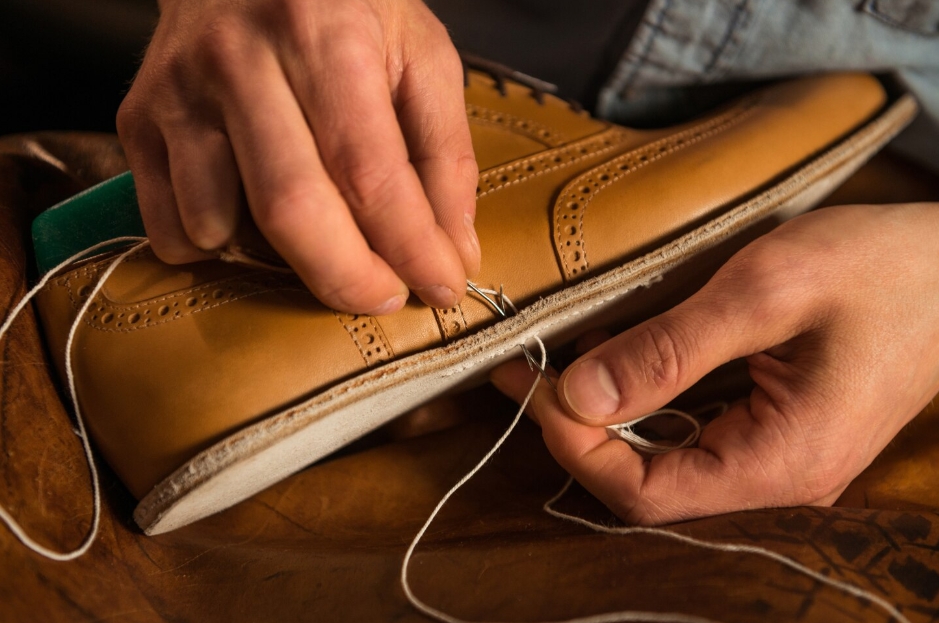
Stitching is an important part in shoe manufacturing that influences the strength, life, and look of a finished product as well as the complete quality of a shoe. A shoe may be made of leather, mesh, canvas, or synthetic material or be a combination of two or more, but the quality of the stitching directly determines the quality of the shoes’ function regarding wearing them in daily life. A simple stitching error can result in seam failure, damage to the material, and consumers’ complaints, while some work may be rejected.
Stitching errors may be caused by the wrong thread, the wrong needle, poor machine settings, poor stitch density, operator error, and poor machine maintenance. If you can determine the cause at an early stage and put in preventative controls, it can reduce rework, boost repeatability and yield, and help to keep product quality steady.
The following are the 10 most prevalent problems in the stitching of shoes and how they can be avoided by manufacturers.
See also:
Table of Contents
1. Thread Breakage
Footwear is stitched under a number of issues, and one of the most prevalent concerns is the occurrence of breakdown in the stitching. It can occur when the thread is subjected to excessive tension, friction, or heat. A genuine needle size, inferior thread, and machine damage, as well as using the wrong needle, can also be a cause of problems.
Prevention measures:
- Choose thread for materials and seams.
- Use the correct tension on the machine.
- Employ an appropriate point and size of needle.
- Examine threads for sharp or broken parts.
- Do not sew too fast on difficult fabrics.
A higher-tenacity polyester or bonded nylon thread may be used if more durability of seams and resistance to abrasion are needed.
2. Skipped Stitches
Skipped stitches will occur if the needle does not create a good stitch with the bobbin thread. This can affect the seam strength and produce an unequal aesthetic.
The most frequent problems are positioning, damage/bent needles, timing, needle points, and thread tension.
Prevention measures:
- Replace broken or injured needles as needed.
- Inspect for correct needle placement and direction.
- Maintain correct machine timing.
- Choose needles that will work with the type of footwork material.
- Regular machine checks are carried out.
It is especially necessary to detect the error early, as the occurrence of the skip may be hard to recognize after the subsequent production processes.
3. Uneven Stitch Density
The seam allowance should be uniform and not disorganized, which may have an adverse impact on the seams and look of the garment. Too high a stitch density can lead to an excessive number of needle holes and can also affect materials to some extent, and not enough stitch density can lead to insufficient seam strength.
Prevention measures:
- Set down standards for stitch densities.
- Calibrate machines regularly.
- Educate trainers on keeping pace with sewing.
- Do routine checks on the production.
- Match the stitch density with the material and function of seams.
Other shoe components might demand a different number of stitches per inch, based on their design, embroidery (polyester embroidery thread) and look.
4. Loose or Tight Stitches
Loose stitches can produce weak seams, and overly tight stitches can lead to puckering, distortion, and thread breaking.
This issue can be linked to either a wrong upper tension or bobbin tension.
Prevention measures:
- Tension machine for the desired yarn size and yarn construction.
- Do some trial stitching before you begin production.
- Check both edges of the seam.
- Set up standard machine parameters for materials.
- Break tension during the whole production, not just setup.
A good stitch will firmly hold, but not crush or otherwise damage, the materials.
5. Seam Puckering
Seam puckering means that the fabric puckers or gathers around the seam. This effect is especially prominent on footwear constructed from thin materials or flexible footwear components, like the upper.
These may be due to over-tensioned threads, too many stitches, different material characteristics, or the wrong size threads.
Prevention measures:
- Tighten the thread down if it is too tight.
- Use an appropriate thread size.
- Optimize stitch density.
- Compare free elongation against the flexibility of the material.
- Use various combinations of needle and thread to test before production.
In addition, if there is excessive puckering, it will also impact the fit and comfort of footwear.
6. Needle Damage to Materials
The penetration of needles can seep through the materials of footwear, causing holes, cuts, tearing, or distortion. Take extra precautions when working with leather, coated textiles, synthetic leather, or fine mesh.
Prevention measures:
- Select the appropriate needle point.
- Use a needle, the smallest size that is suitable.
- Change sharp needles on a regular basis.
- Don’t overstitch.
- Do trials with sewing material specific.
For sensitive materials, needle penetration control is critical, as each hole can act as a stress concentration.
7. Thread Fraying
The thread surface is damaged during sewing or later, which causes thread fraying. A frayed seam can allow moisture to seep in and can make the sewing job appear untidy.
There is little thread production, it is very easy to pull, the machine is very poorly constructed, the sewing is done too fast, or the machine is poorly lubricated.
Prevention measures:
- Use threads of the appropriate wear characteristics.
- Keep leads and tension elements in place.
- Control sewing speed.
- Provide proper lubrication and/or finishing of the thread.
- Rub out damaged components of the machine.
When choosing threads for high-performance shoes, it is important to take into account the ability to resist repeated abrasion and flexing as well as tensile strength.
8. Seam Slippage
Seam slippage is the separation of the cloth or upper from the stitching as it is stretched. Maybe there is a problem with woven fabrics or some synthetic fabrics.
A good thread is insignificant if the material does not fit the seam well.
Prevention measures:
- Choose appropriate stitches.
- Pick the correct number of stitches.
- Test the strength of the material prior to production.
- Think about reinforcement for high-stress areas.
- Perform seam-strength and seam-slippage testing.
In regions of high loading there may be a need for reinforcement tapes or extra stitching.
9. Incorrect Stitch Alignment
The seam may be sound, but its placement can result in poor-quality footwear—misaligned stitching. It is especially visible on any part with a decorative panel, logos, toe regions, etc.—parts of a shoe where the stitch lines are uneven.
Prevention measures:
- Follow correct guides/machine attachments.
- Set up stitching pattern guides.
- Instruct trainers on how to perform teaching with alignment.
- Regularly check up on key visual spaces.
- Use automatic or semi-automatic sewing systems where appropriate.
Footwear brands, more and more focused on premium aesthetics and manufacturing precision, make consistent alignment an even more crucial element.
10. Seam Opening or Stitch Failure
Seam opening is when sown seams separate or thread breaks in service. It can be caused by lack of thread tension, bad stitches, incorrect stitch tension, lack of back-stitching, or too much strain on the stitch.
Prevention measures:
- Basic threads selection based on the anticipated loading on the seam.
- Adjust stitches and mending to be as compact as possible.
- Take the correct seam allowance.
- Reinforce high-stress areas.
- Carry out tensile and flex-fatigue tests.
The critical footwear seams are to be tested, not just by looking, but under conditions that simulate the life of the product.
Conclusion
The problematic stitching of footwear can directly affect the occurrence of product quality issues and production efficiency as well as customer satisfaction. In many cases these problems can be decreased by suitable engineering and process control, including thread breakage, skipped stitches, uneven stitch density, seam puckering, material damage, fraying, seam slippage, misalignment, and stitch failure.
The thread, needle, machine, stitch density, material, and technique of the operator must be considered together as part of a whole. The same goes for a good sew—no good thread will make a good seam unless it’s made with a good sew, and no advanced machine can compensate for poor settings.
When using the right thread, setting standard sewing parameters, maintaining the equipment properly, training the operators, and conducting systematic quality testing, footwear manufacturers can reduce defects to make the products more consistent, long-lasting, and handsome. With more complicated footwear designs and increasing automation, the ability to produce good stitches will continue to be important to manufacturing reliability and quality management.
